
AUTOMATED
 +
Revolution Pro + Hamilton
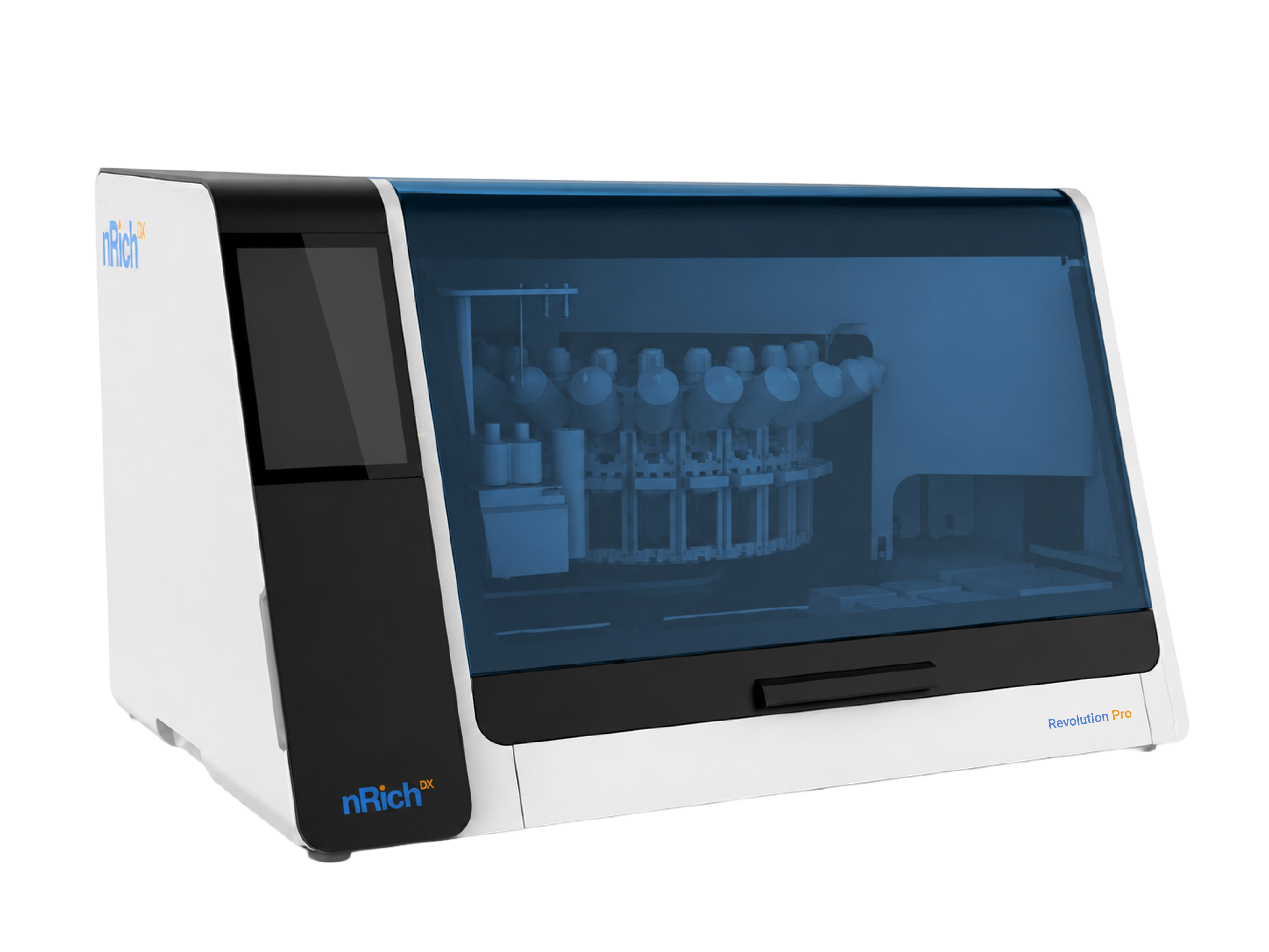
Scalable automation designed to support high-throughput batch processing.
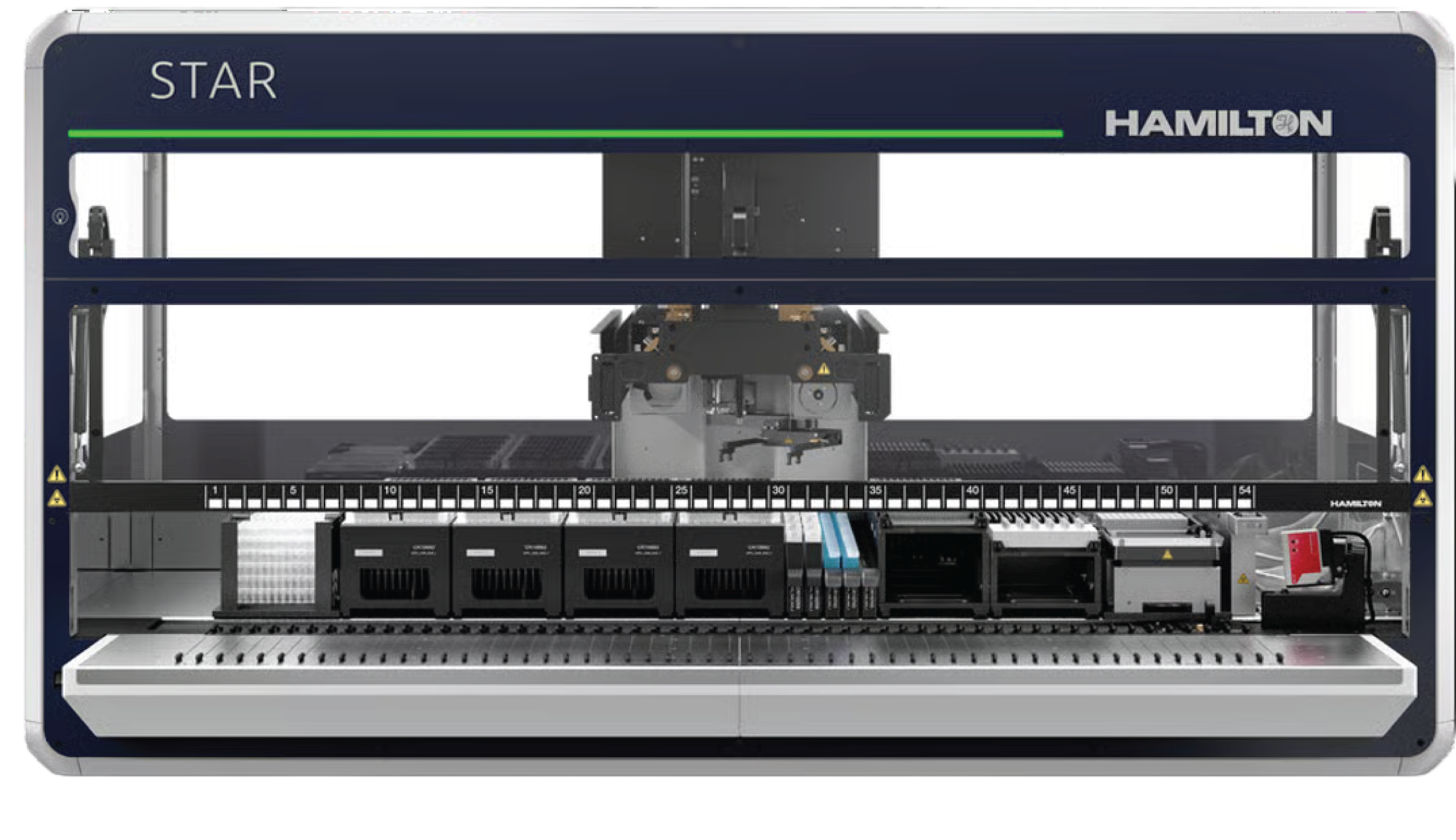
WorkflowAutomated extraction with interface to Hamilton STAR for wash/elution.
More Signal. Earlier Detection. Better Outcomes.
Analyte extraction defines what can be detected.
Revolution Pro brings nRichDX high-recovery liquid biopsy sample preparation into an automated workflow designed to support low-abundance molecular applications, flexible sample inputs, and scalable laboratory operation.
* Up to 50 mL for cell-free applications.
Published validation studies from leading multi-cancer early detection companies evidence the difficulty in detecting cancer at its earliest stage.
The most overlooked constraint in liquid biopsy is not sequencing or bioinformatics. It is the amount of analyte entering the assay.
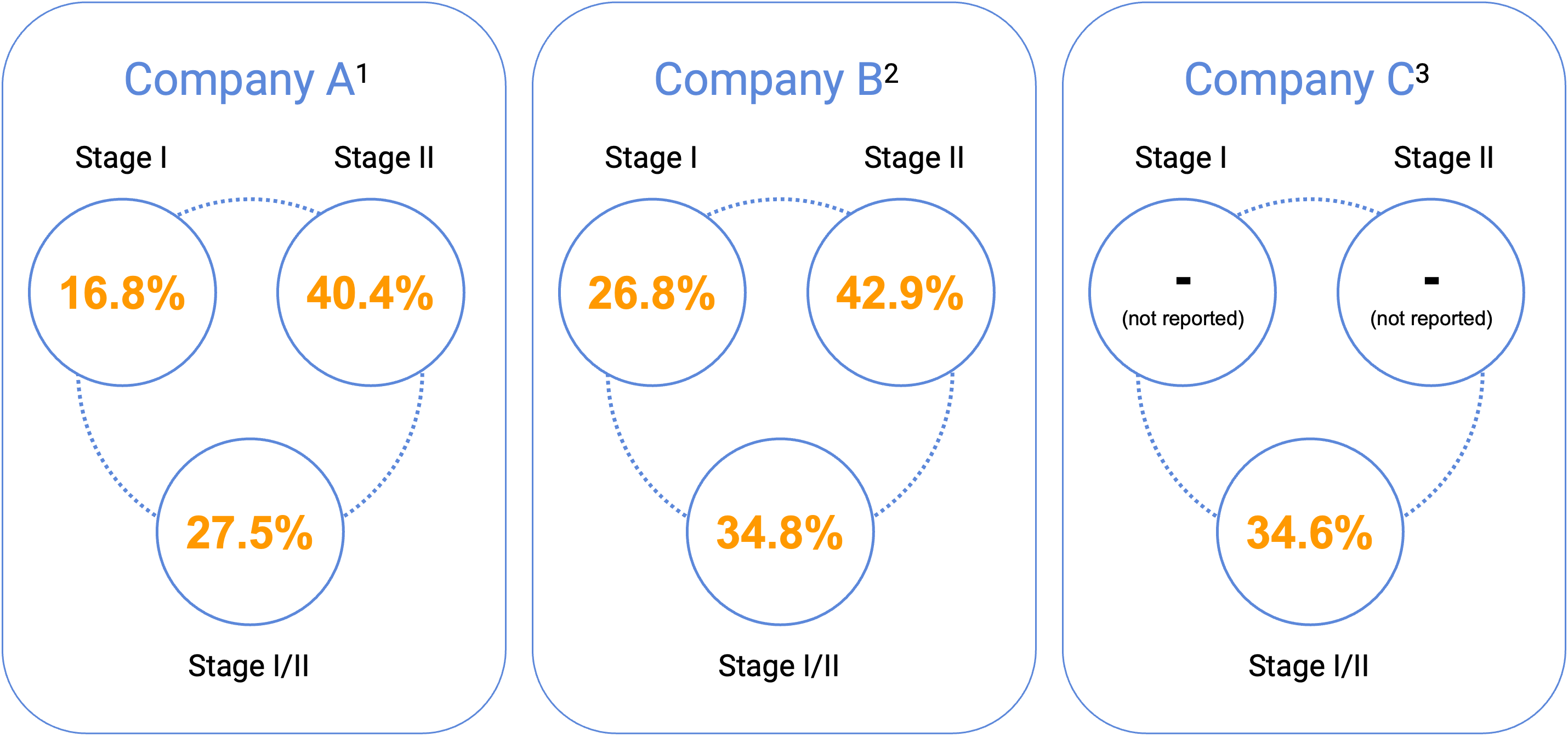
Know the optimal sample input that maximizes your assay’s clinical sensitivity.
Empirically determine the optimal plasma volume for Stage I & II early cancer and MRD detection.
Evaluate assay performance across increasing sample volumes to identify where sensitivity plateaus and establish the sample input that best supports assay performance.
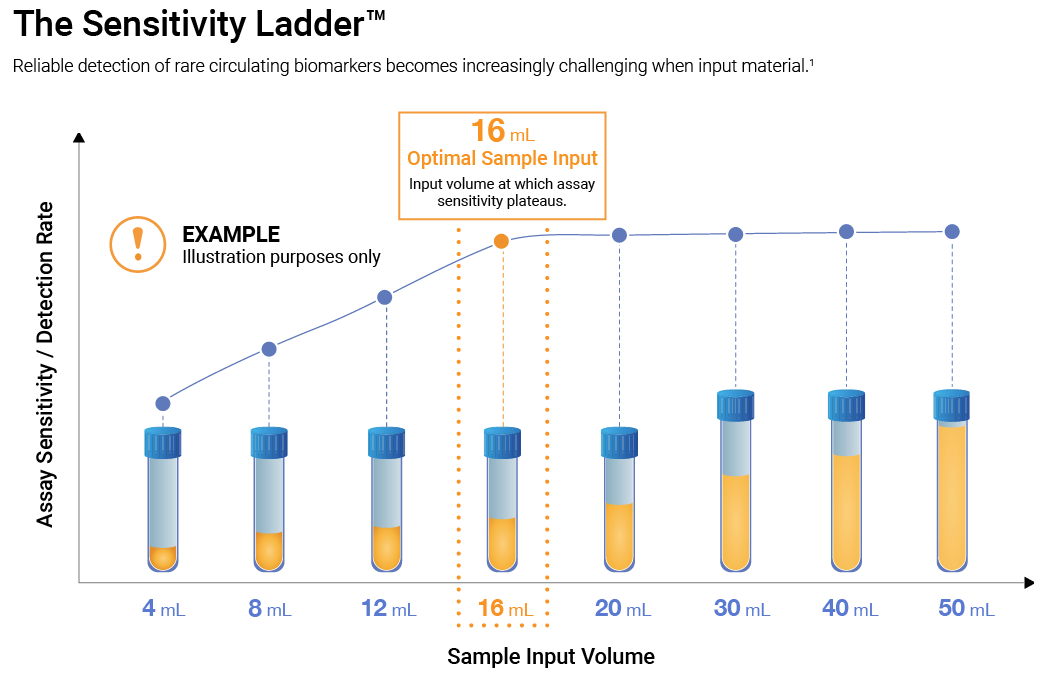

Early cancer and MRD detection is an input problem.
Rare molecular signals need more opportunities to be recovered before detection begins.
More recovered analyte positions downstream assays for earlier detection.
 If assay sensitivity improves with increased sample input.
 Sample volume that increases sensitivity without reducing specificity.
 Optimal balance between sample input and assay performance.
 If higher sample input reduces sequencing or bioinformatics costs.
 Clinical justification for larger sample collection.
Use the same framework to move from sample-input evaluation into a standardized automated workflow.

Use Revolution Pro to test multiple sample inputs.
Quantify clinical sensitivity at each input volume.
Identify where assay performance plateaus.
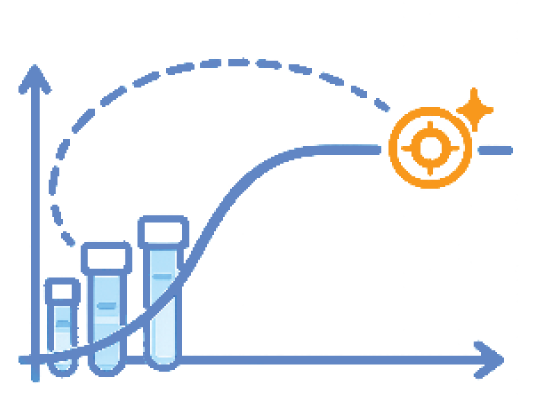
Select the lowest input delivering maximum clinical performance.
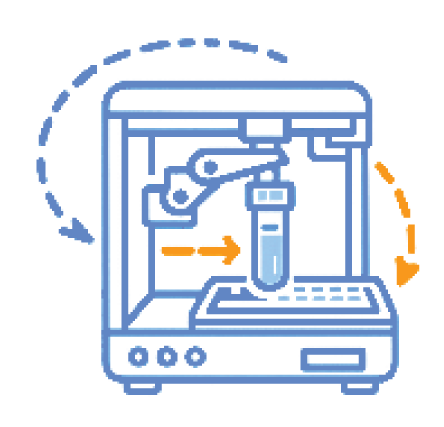
Use Revolution Pro to perform single, fully automated extractions for volumes up to 50 mL.
1 Deveson IW, et al. Nat Biotechnol. 2021;39:1115–1128. doi:10.1038/s41587-021-00857-z.
Revolution Pro enables developers to determine the sample input volume that delivers maximum assay sensitivity and then transition that optimized workflow into routine, high-throughput production.

Ensure optimization identifies the lowest sample volume capable of achieving maximum assay sensitivity.
From 1 mL to 100 mL, eliminating the variability and data erosion associated with multiple extractions and pooled eluates.
Across the full sample volume range, providing accurate, unbiased sensitivity comparisons without data distortion.
Including cfDNA, cfRNA, cfTNA, and circulating tumor cells.
Including whole blood, plasma, urine, cerebrospinal fluid, peritoneal fluid, and other clinically relevant body fluids.
Move the optimized extraction protocol from assay development into scalable clinical or commercial production using the same extraction platform.
The Sensitivity Ladder™ enables assay developers to determine the sample input volume that delivers maximum assay sensitivity. Revolution Pro then carries that optimized extraction workflow into routine, high-throughput production.
Evaluate multiple sample inputs using Revolution Pro.
Identify where assay performance plateaus.
Select the lowest input delivering maximum clinical performance.
Move the optimized extraction protocol into routine automated processing.
Two automation configurations deliver the same core advantages for assay development, routine processing, and high-throughput liquid biopsy workflows.
Blood, plasma, urine, CSF, peritoneal fluid, and other biofluids.
cfDNA, cfRNA, cfTNA, and CTC workflows.
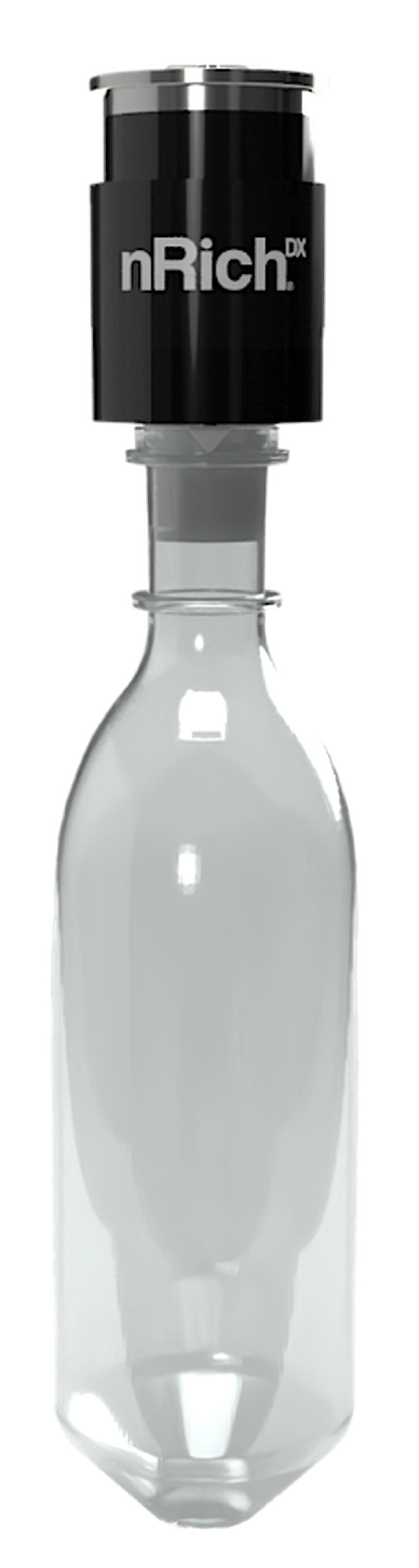
nRicher Cartridge
The patented heart of the Revolution platform.
Unmatched extraction/enrichment efficiency for higher yields across the supported sample volume range.
The widest sample volume range in a single extraction.*
* Up to 50 mL for cell-free applications.
Evaluate the configuration and throughput requirements that best support your assay and laboratory workflow.
+
Scalable automation designed to support high-throughput batch processing.
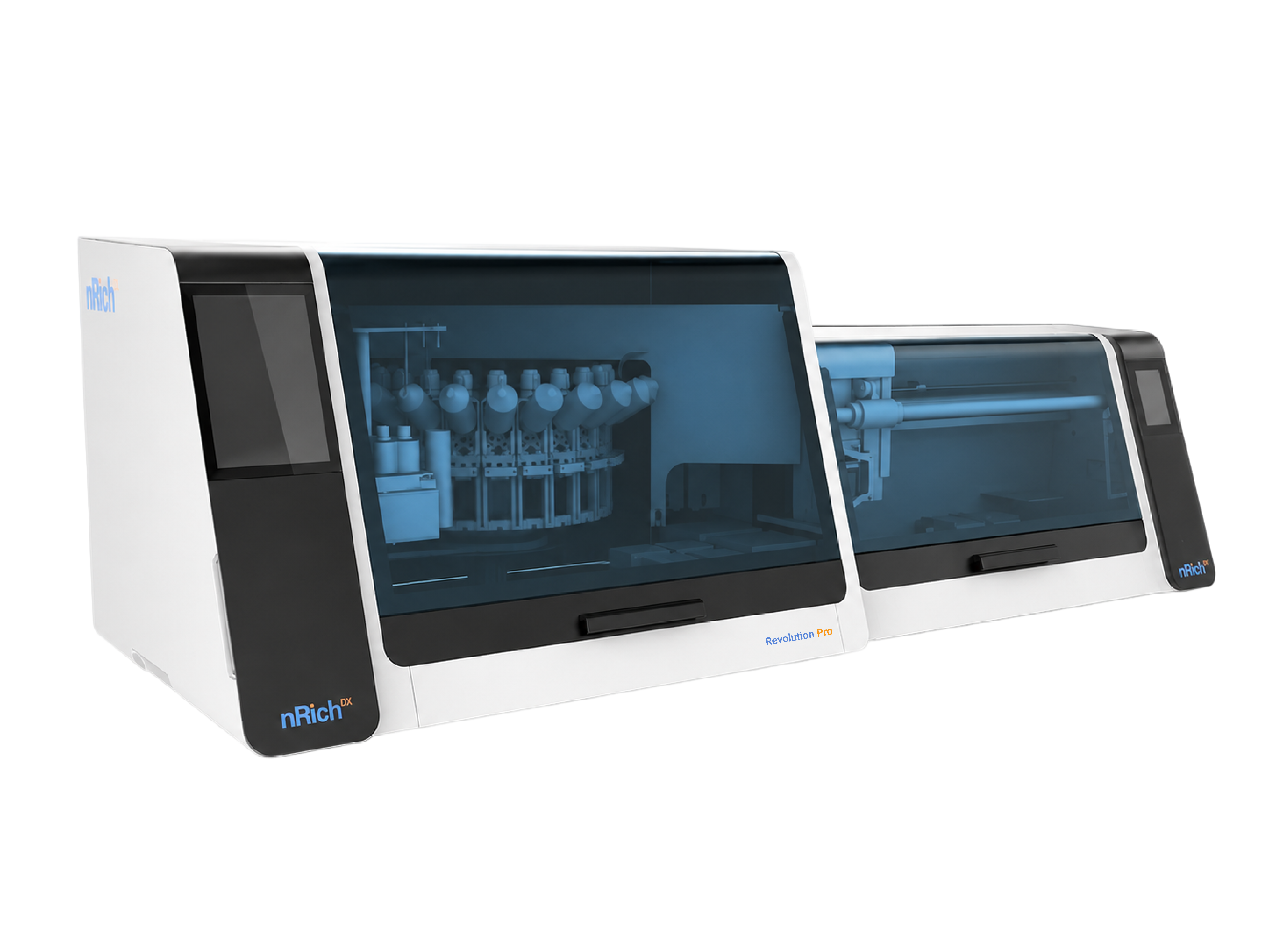
Integrated automation designed to minimize operator intervention from sample preparation through purified analyte.
Revolution Pro is designed to reduce hands-on burden while supporting mixed sample inputs, high-throughput reagent capacity, and continuity across the laboratory workflow.
Revolution Pro is designed around workflows where the quantity and quality of molecular input can constrain downstream analysis.
Support sample-input evaluation for Stage I and Stage II workflows where circulating tumor-derived material may be limited.
Enable larger-volume recovery workflows for applications where residual disease signal can be extremely low.
Support broad analyte workflows across cfDNA, cfRNA, cfTNA, and circulating tumor cells.
Standardize recovery-focused sample preparation across variable sample types, volumes, and automation requirements.
From single-pass sample handling through automated throughput, the specifications below define the operating range of Revolution Pro.
Complete system specifications from sample input through throughput, workflow flexibility, and continuous operation.
| Automation | Fully automated sample-to-elution with Revolution ES module |
|---|---|
| Optional Automation | Fully automated extraction with interface to Hamilton STAR for wash/elution |
| Extraction Efficiency | 80%–95% |
| Sample Volumes (single extraction) | 1 mL–100 mLUp to 50 mL for cell-free applications |
| Elution Options | 25 µL to 100 µL across the sample volume range |
| Analytes | cfDNA, cfRNA, cfTNA, CTCs |
|---|---|
| Sample Types | Plasma, Cell-free Urine, Whole Urine, Whole Blood, CSF, Peritoneal Fluid, Other Body Fluids |
| Samples per Batch | 24 |
| Sample Flexibility | Extract from multiple sample volumes and multiple sample types in same batch |
| Processing Time | ~2 hours |
|---|---|
| Hands-On Time | 10 minutes per batch |
| Throughput per Shift | 120 samples |
| High-Throughput Support | Reagent kit supports up to 480 extractions |
| Workflow Efficiency | Semi-random access sample loading for uninterrupted workflow |
|---|---|
| Never-Dry System™ | Dual reagent system ensures continuous operation |
| Application Modes | Programmed application modes |
Revolution Pro supports liquid biopsy workflows across multiple analytes and biologically relevant sample types.
Explore supporting publications, posters, technical resources, and the full Sensitivity Ladder™ framework behind nRichDX liquid biopsy sample preparation.
Use The Sensitivity Ladder™ to evaluate multiple sample inputs and translate the optimized extraction workflow into Revolution Pro.